Likely leak.
ReportedEach consultant managed quote follow-up separately, leaving no shared view of owners and next actions.
Read the Revenue Leak Snapshot →The path starts free. A Snapshot names the most likely leak, an Audit tests it against a month of your own records, and a Sprint fixes what the audit proves.
From one Revenue Leak Audit $7,680 in actionable quote value had no recorded follow-up. At the showroom's 36% historical conversion rate, that represented about $2,765 in expected-value exposure, not measured loss. See the case file →Every engagement starts with a free Snapshot. The Audit and Sprint only come after, and only if the numbers are worth it.
Start hereSeven short questions, public research, and a 30-minute phone call. You leave with one likely revenue leak and the first fix; your written Snapshot follows within one business day. No obligation.
A full pass through how work actually moves: inquiries, quotes, follow-up, scheduling, invoicing. A written report ranking what's costing you the most, with a fix plan for each item.
The Audit gives us the numbers to define what should be fixed and how the result will be measured. The scope and fixed price are agreed before work begins.
One lighting showroom, both deliverables. First, the Snapshot named a likely follow-up gap from the outside. Then the Audit tested it against a month of the showroom's own records.
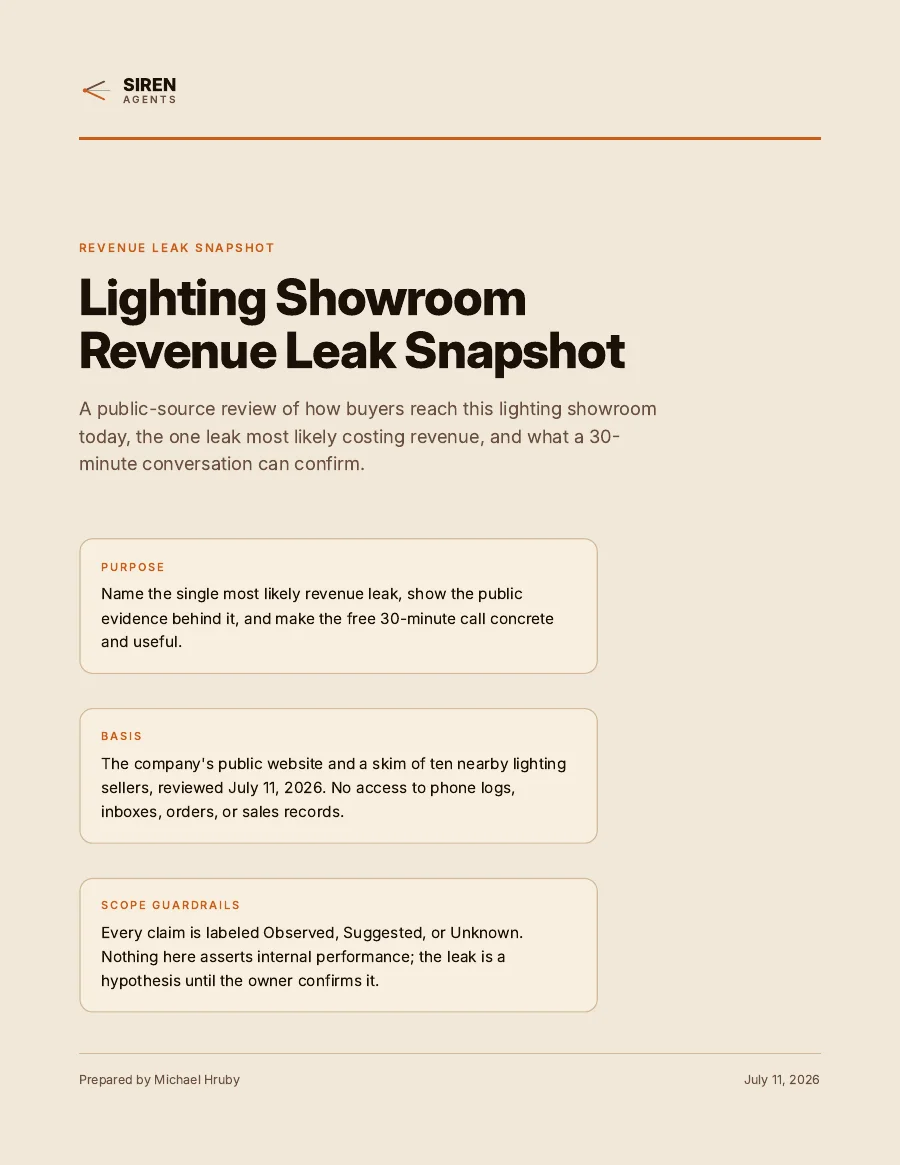
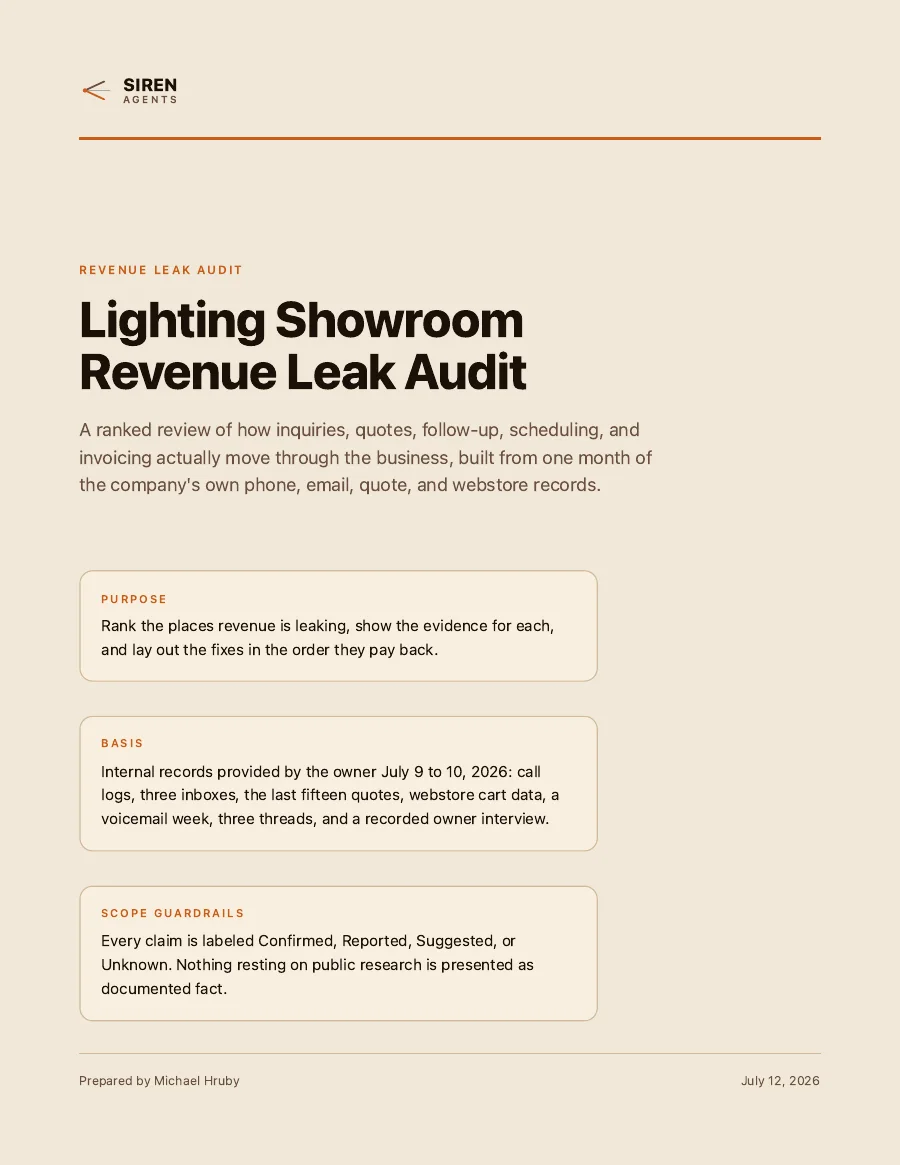
ReportedEach consultant managed quote follow-up separately, leaving no shared view of owners and next actions.
Read the Revenue Leak Snapshot →Straight answers about the Snapshot, the Audit, and what a fix involves.
It starts with seven short intake questions so I can research your business before we speak. During the 30-minute call, we follow one recent inquiry from arrival to outcome and test where the path may be breaking down. You leave the call with one likely revenue leak and the first fix I would prioritize. I send the written Snapshot within one business day. Nothing to install, and no obligation to go further.
No. The Snapshot is designed to develop the best-supported hypothesis from what can be seen from the outside, your intake answers, and the real inquiry we follow during the call. It does not claim to prove a loss without internal evidence. If the likely leak needs to be tested against your records, that is what the Audit is for.
The Snapshot identifies one likely leak from public research and owner context. The Audit tests that hypothesis against a month of real business activity and looks across the larger path from inquiry through invoicing. You receive a written report ranking the supported leaks, what they may be costing you, and what to fix first. The $250 pays for that evidence review and report, not a sales conversation. The report is yours whether or not you continue.
It depends on the suspected leak. We may look at recent inquiries, call records, quotes, follow-up, appointments, or invoices from the month being reviewed. You share your screen and stay at the controls while I direct the review. I do not need your passwords or an independent login, and we only examine what is needed to test how the work is moving.
Then that is the result. If the suspected leak does not hold up, I will say so, and the Snapshot can end there. You still leave with a clearer view of how inquiries move through the business. If the issue is small enough to fix yourself, that becomes the first fix. The Snapshot has to justify the Audit, and the Audit has to justify a Sprint.
No. The written Snapshot and Audit report are yours. You can make the changes yourself, give the plan to someone else, or stop there. If you want Siren Agents to implement the highest-priority fix, that becomes a Leak Fix Sprint. The scope, fixed price, and result being measured are agreed before implementation begins, and the outcome is evaluated in your own numbers.
Free, and what I find is yours to use with or without me.